Tag: 创意
Dkphhh Created@
Dkphhh's MurmurCreated@ Wed Feb 05 2025 00:07:09 GMT+0800 (China Standard Time)
Dkphhh Created@
Dkphhh's MurmurCreated@ Tue Dec 10 2024 16:18:45 GMT+0800 (China Standard Time)
微软能不能开发一个「Tython」,把 Typescript 那套类型系统移植到 Python 上,写完以后直接生成优化过的 Python 代码?
Dkphhh Created@
Dkphhh's MurmurCreated@ Tue Dec 10 2024 13:58:07 GMT+0800 (China Standard Time)
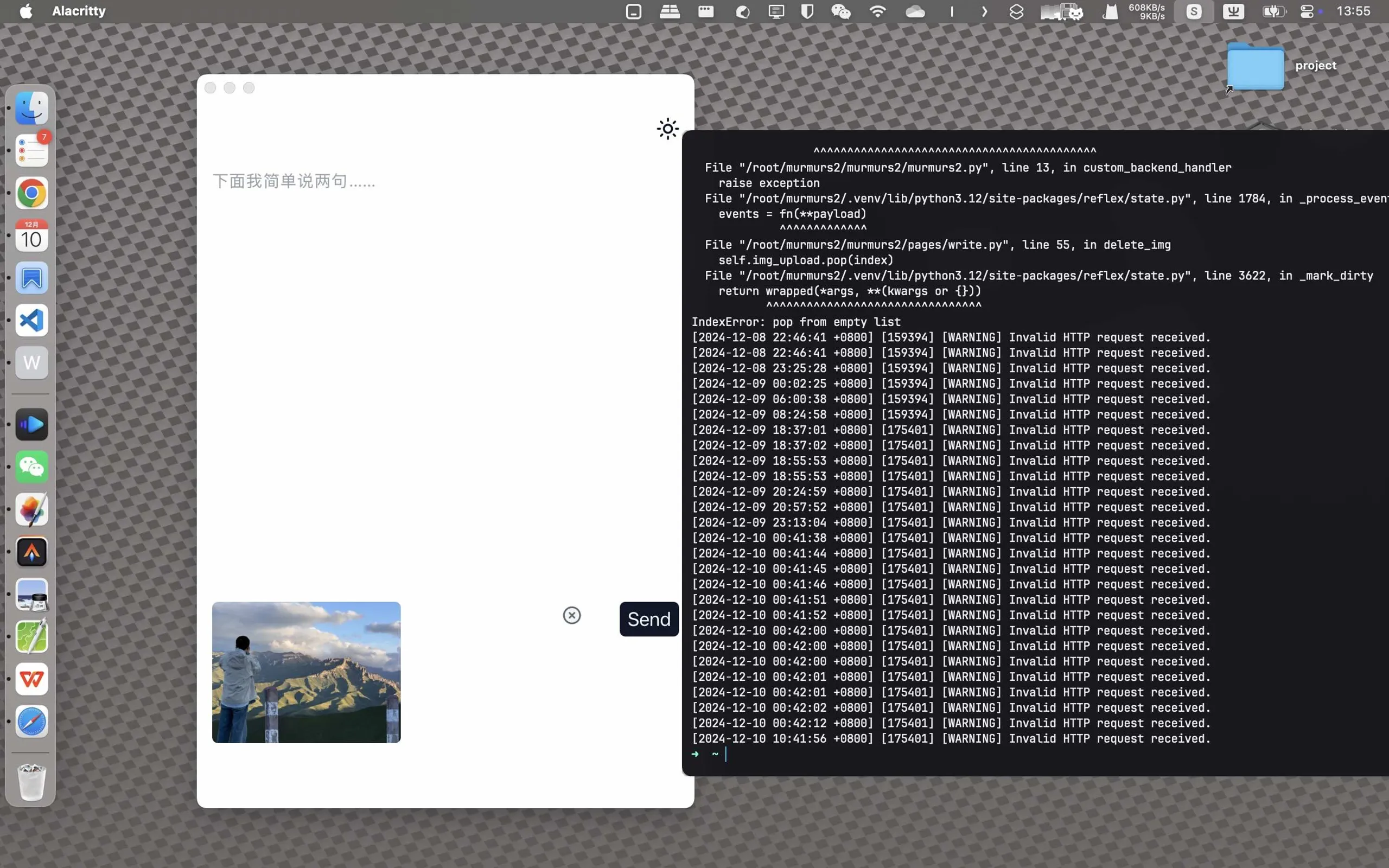
Safari 还能把网页包装成独立的 app👍

Dkphhh Created@
Dkphhh's MurmurCreated@ Mon Nov 25 2024 20:38:00 GMT+0800 (China Standard Time)
红 💊:hack 一个高度成熟的东西,把它玩出花
蓝 💊:学习更加通用,可扩展性更强的技术
Dkphhh Created@
Dkphhh's MurmurCreated@ Mon Nov 25 2024 14:30:00 GMT+0800 (China Standard Time)
创造力 >>> 生产力
Dkphhh Created@
Dkphhh's MurmurCreated@ Thu Nov 14 2024 14:15:00 GMT+0800 (China Standard Time)
在我看来,广告营销其实最能代表当下多数人的喜好是什么——至少是品牌和最懂传播的人认为的当下多数人的喜好。
行为心理学上有一个著名的说法叫选美博弈。它的意思是,你在选美投票时,不是把票投给自己认为最美的那个人,而是会投给你认为多数人都认为最美的人。
一支广告出街,可能并不代表品牌认为这支广告最好,不代表做出这支广告的人认为它是最佳创意,但它一定代表这些聪明人认为这支广告会被多数人接受并受到影响。
来源:我为什么爱看广告
Dkphhh Created@
Dkphhh's MurmurCreated@ Thu Oct 31 2024 08:04:00 GMT+0800 (China Standard Time)
Yes indeed
如果我們不知道一件作品背後的人是誰,要麼因爲它發生於作者意識還不存在的古代,要麼就是有商業力量不希望妳知道那些人是誰(比如妳不知道 Duffy、Stella Lou、Gelatoni 的設計者是誰——如果妳知道?Good for you!)。但我想,對作者的不在乎是大衆說給自己聽的謊言,因爲每一個在家裏負責烹飪的人都會對自己的「手作」感到自豪。心想事成是最低級幼稚的科幻想像。
Dkphhh Created@
Dkphhh's MurmurCreated@ Fri Oct 18 2024 09:54:00 GMT+0800 (China Standard Time)
编程对我来说真的是娱乐活动,看着玲琅满目的技术栈,我陷入了一种小时候选择玩具时的纠结,要是时间够,我真的想都学一遍。
Dkphhh Created@
Dkphhh's MurmurCreated@ Tue Oct 08 2024 23:26:00 GMT+0800 (China Standard Time)
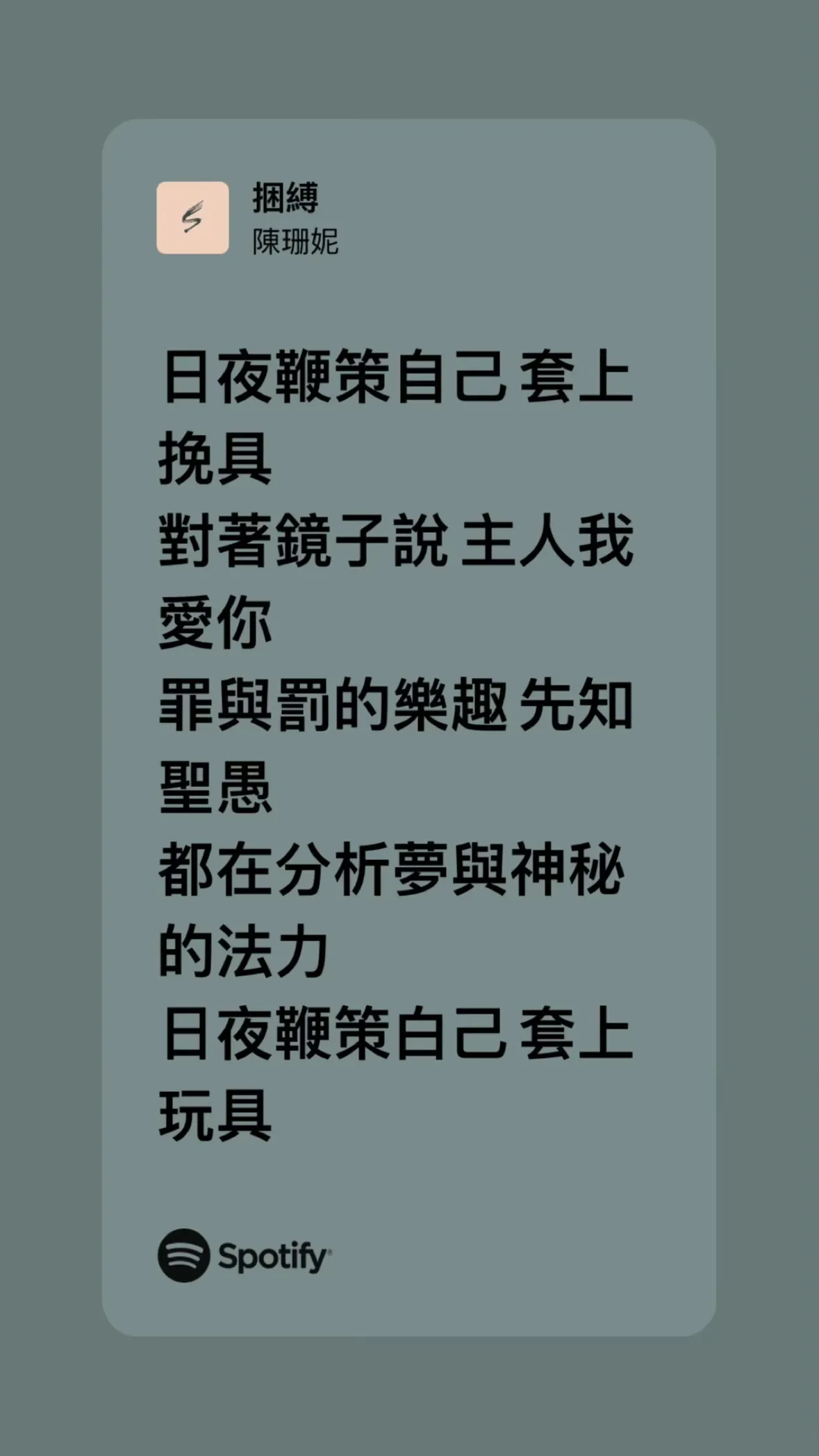
挽具,玩具,陳珊妮真当代顶级 copywriter
Madeleine Gross Published@
A key part of creativity is picking up on what others overlook | Psyche Ideas
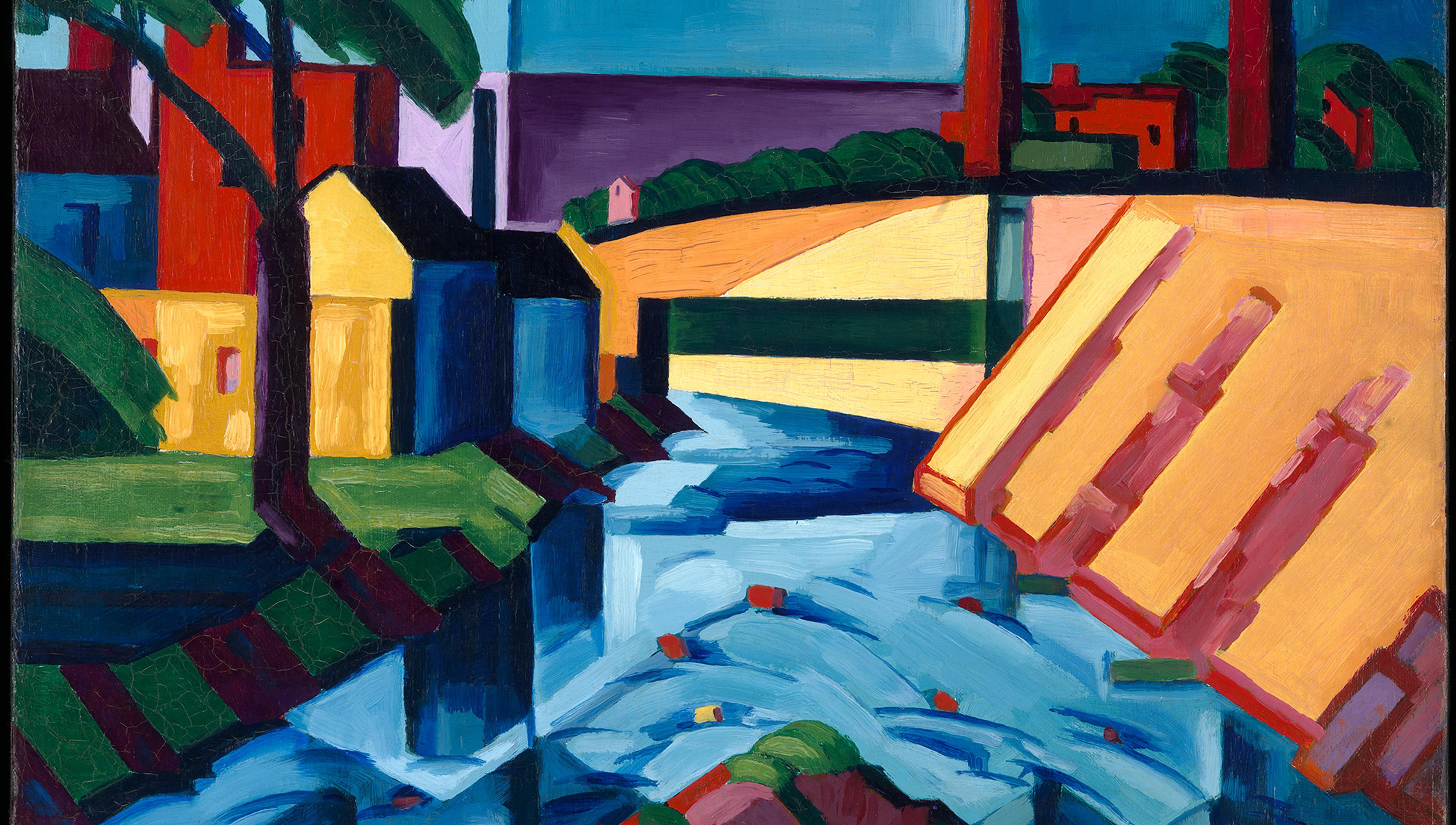
Have you ever wondered why creative individuals seem to spot things that others miss? Whether it’s an inventor who finds an innovative solution to a familiar problem or an artist who reinterprets a landscape in a fresh way, many creative people have a special ability to find significance even in the mundane. Research suggests this isn’t just a coincidence: differences in the way someone’s brain prioritises information might actually fuel creative thinking.
Let’s consider how your brain prioritises information in everyday contexts. Every time you open your eyes, you’re flooded with visual information – way more than your brain can handle at once. Yet you aren’t overwhelmed, thanks to sophisticated attention mechanisms that filter out unnecessary stuff. These mechanisms typically prioritise information based on how important, valuable, surprising or relevant it seems. For example, you might be admiring some ripe pomegranates in a tree (a valuable resource), but if a snake suddenly slithers down the bough, your attention will snap to the snake because its presence is far more urgent. Evolution has fine-tuned this process to ensure we react quickly and appropriately to the most critical information; this may be a valuable resource in one moment (eg, pomegranates) but a dangerous obstacle the next (eg, snakes). As a result, people tend to notice similar things in their environment. But there are some intriguing differences in what captures each person’s attention. That’s where our research comes in.
My work explores the ways in which creative individuals prioritise information differently to their less creative counterparts. In one of our studies, my research collaborators and I used a classic task to see how the brain responds to another type of high priority information: surprising information. Participants listened to mostly repetitive auditory tones with the occasional rare – or ‘oddball’ – tone, while their brain activity was recorded using an electroencephalogram. Typically, individuals’ brains respond to the rare stimulus with a well-defined spike in neural activity, known as the P300, which indicates surprise. But for creative individuals? We find this spike is less pronounced.
In other words, it seems that creative people don’t see unusual information as quite so unusual. This may offer a big advantage for creative thinking because it blurs the line between what’s typical and atypical, allowing unusual ideas to be considered – and ensuring that the most obvious parts of a problem do not take up all the attention.
**The idea that creativity and attention **are linked isn’t new. Research has long shown connections between creativity and different types of attention, including links to ADHD, broad or unfocused attention, and so-called ‘leaky’ attention – that is, a less efficient attentional filter, through which irrelevant information is able to ‘leak’ into focus. Our research is suggesting that these differences in attention may come down to variations in how our brains prioritise sensory data – a dopamine-driven process called ‘incentive salience attribution’.
Incentive salience attribution is the process by which raw sensory data is unconsciously assigned significance and deemed worthy of attention, making certain information stand out from the rest. This process is closely tied to attention but also plays a major role in motivating thoughts and actions in response to significant information. This motivational aspect seems to be key to understanding how salience processes support creative thinking.
Newton saw an apple fall from a tree – something most people might view as trivial. Yet, he saw the apple’s fall as significant
Several theories of attention – such as the idea that creatives have a ‘leaky filter’ – help explain why creative individuals notice new information, but not why they are motivated by it. Creative minds seem irresistibly attracted to novel or unconventional information. My colleague Jonathan Schooler and I propose that this attraction is driven by the motivational properties of salience. When unconventional information gets flagged, it acts like a magnet, compelling individuals to explore it. This exploration boosts the chances that novel information will become a part of the creative problem-solving process, sparking innovative ideas.
This framework offers a new way to understand both creative traits and creative states. By creative traits, I mean the consistent differences in creativity that we observe when we compare individuals. Research indicates that how a person processes what’s important – the brain’s salience system – varies systematically from person to person. For example, people with schizotypy or autism often show unique patterns of salience processing, meaning they are naturally drawn to unconventional details. For example, individuals with autism tend to pay less attention to faces and social cues, such as where someone is looking, but more attention to mechanical objects or objects related to their specific interests. Similarly, we suggest that variations in the salience system may predispose some individuals to notice and then consider the unconventional, fostering a natural tendency toward original, creative thinking.
Now, let’s delve into creative states – those spontaneous bursts of creativity that can happen at any moment. Even the most creative individuals aren’t always in a state of creativity, nor are they creative in every situation. But during moments of creative insight, less obvious aspects of a problem can suddenly stand out, leading to that thrilling ‘eureka’ moment when new connections are made. On the other hand, uncreative ideas often emerge when someone can’t see beyond the obvious, getting stuck on familiar patterns. This is where common barriers to creativity come into play, including functional fixedness – a cognitive bias that prevents people from seeing alternative uses for objects or alternative solutions to problems.
We suggest that the functioning of the salience system plays a crucial role in these different modes. When attention is captured by an aspect of a problem or situation that isn’t usually prominent or relevant, the salience system has flagged atypical information for further processing, paving the way to a creative insight. On the other hand, creative blocks, such as functional fixedness, may arise under ‘typical’ salience functioning, where the system flags only the most prominent, obvious features of the problem for consideration.
Think about Isaac Newton’s famous insight into gravity. According to the story, Newton saw an apple fall from a tree – something most people might view as trivial. Yet, in this instance, he saw the apple’s fall as significant, prompting him to contemplate it more deeply. Entertaining the potential importance of this seemingly irrelevant occurrence led to a breakthrough connection: that the same force causing the apple to fall also influences celestial bodies like the Moon.
In this example, the creative individual’s brain flags unusual or ‘irrelevant’ information as significant, prompting them to explore it further. This exploration allows them to consider remote ideas and associations that others overlook, increasing the likelihood of a creative insight. Notice how the information that gets flagged doesn’t necessarily have to be directly related to the problem at hand; its value lies in the potential connections it can inspire, leading to innovative and unexpected outcomes. A similar process likely unfolds in artistic contexts, such as when a painter, musician or filmmaker sees a seemingly irrelevant detail as meaningful. For instance, an artist may find themselves captivated by the shadow cast by an object, finding it more interesting than the object itself. This might inspire a series of works exploring the hidden beauty of shadows.
**Thinking of this atypical salience functioning **as a state suggests that it could be ‘switched on’, potentially leading to creative thinking. Although direct evidence is lacking, there are several examples that hint at this possibility.
One example comes from individuals with Parkinson’s disease (PD). In particular, some patients receiving dopaminergic therapy to treat their PD have been shown to exhibit the characteristic symptoms of atypical salience processing; they sometimes report experiencing the world as teeming with unusual significance, where even trivial or irrelevant information seems to carry hidden meaning. A separate line of research shows that treated PD patients can experience sudden artistic developments or a drive to create. An open question is whether the atypical salience processing in these patients motivates this artistic drive.
What might seem like irrelevant information could actually offer an adaptive advantage, leading to unexpected insights
Certain kinds of everyday experiences might also influence how the brain assigns salience. For instance, some types of visual art, such as abstract or surrealist works, disrupt a viewer’s usual way of seeing by creating paradoxes and visual conflicts that don’t occur in nature. We believe that the unconventional nature of abstract art encourages the brain to enter a different state, relaxing its default perceptual predictions to accommodate the unusual sensory input. Supporting this idea, our lab has found that viewing art leads to some of the outcomes we theorise are associated with atypical incentive processing – including creativity. Now, we intend to examine whether atypical salience processing is responsible for driving the effect of art on these outcomes.
Another example where creativity and atypical salience processing intersect is in the context of cannabis use. Many users claim that cannabis sparks their creativity, helping them think outside the box and come up with original ideas. This perception might be linked to cannabis’s ability to induce atypical salience processing, which has been shown to drive some of the downstream effects associated with its consumption. However, the connection between creativity and cannabis is challenging to observe in laboratory settings. Most scientific research examining creativity and cannabis has focused on very specific types of creative thinking – such as the kind captured by lab-based tasks in which participants must generate as many ideas as possible in a limited time. These tasks rely heavily on cognitive control, which is the ability to focus and filter out irrelevant information. This style of thinking may actually conflict with the more free-flowing, open-minded attention style associated with atypical salience processing. Thus, existing research may be obscuring the broader impacts of cannabis on creative thinking.
This brings us to a crucial point: the concept of creativity is broad and multifaceted. Under the umbrella of ‘creativity’, researchers have identified two distinct attention styles. One of these, described previously, is leaky attention, which has been linked to real-life creative achievements. The other type of attention is characterised by highly controlled, ‘watertight’ focus. People with this attentional style are great at blocking out distractions and can shift their attention based on what’s needed for the task at hand. And this kind of attention is often a strong predictor of success in lab-based creativity tasks, especially those that are time-sensitive and require generating lots of ideas quickly.
Our atypical salience framework aligns best with the leaky attentional style and is therefore most likely to explain creative performance in artistic domains and predict real-life creative accomplishments. By distinguishing between these types of attention, we can better understand the diverse ways creativity manifests, and tailor our approaches to studying and fostering creativity across different contexts.
Taking a step back, our research proposes a new outlook on what is traditionally seen as ‘healthy’ neural functioning. While it’s often helpful, of course, to focus on the most clearly relevant information, this can sometimes constrain creative potential. In contrast, what might seem like irrelevant information could actually offer an adaptive advantage, leading to unexpected insights. From this perspective, the uniqueness of creative individuals lies in their ability to perceive and prioritise information in distinctive ways, embracing the unconventional and unexpected.